Watercolor Wildflower Borders: Beyond Basic Clipart
In the world of digital design, we often get caught up in the technical side of things—pixels, vectors, and code. But sometimes, the most effective way to connect with an audience is through organic texture and warmth. That is exactly what the Watercolor Wildflower Borders Clipart collection brings to the table. This isn't just a set of images; it is a toolkit for adding a distinct, hand-painted personality to your projects. If you are a designer, a small business owner, or a creative hobbyist, understanding how to leverage these assets can transform your work from generic to genuine.
The Aesthetic: Why Watercolor Works
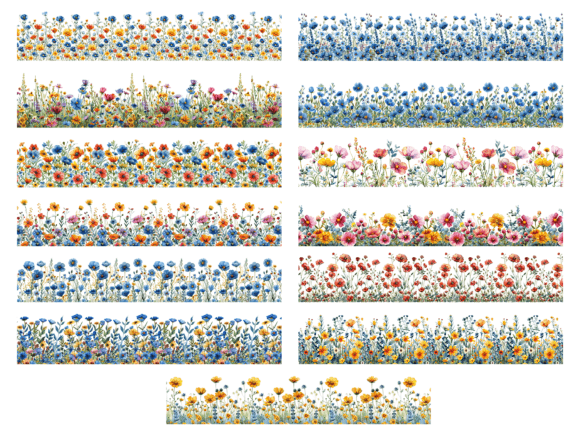
Let’s talk about the visual weight of these assets. The collection features 13 distinct borders, each rendered in a classic watercolor style. We are talking about soft edges, color bleeds, and that beautiful imperfection that only comes from paint meeting water. The style is inherently romantic and nostalgic, making it a perfect fit for the modern typography trend that pairs clean sans serif font choices with messy, artistic illustrations.
What makes this specific Watercolor Wildflower Borders Clipart set stand out is the color palette and composition. The flowers aren't stiff or overly symmetrical; they feel wild and organic. This "wildflower" aesthetic is incredibly versatile. It avoids the stiff look of corporate stock photography and instead offers something that feels personal and curated. For a brand identity that wants to signal creativity, nature, or artisanal quality, these borders provide instant visual context.
Strategic Applications for Professionals
As a designer or content creator, your job is to solve visual problems. Here is how these assets fit into specific professional workflows:
1. Wedding and Event Stationery
This is the most natural home for floral borders. When designing invitations, RSVP cards, or wedding websites, you need a display font or script font that feels elegant. However, text alone often lacks the necessary "mood." By framing your typography with these wildflower borders, you create a focal point. The high resolution (300 DPI) ensures that when you send these files to a professional printer for physical invites, the ink will sit crisp and clear on the paper, maintaining the texture of the watercolor wash.
2. Publishing and Editorial Design
If you are working on editorial design—think book covers, chapter headers, or magazine layouts—decorative elements are crucial for pacing. A full-page border can act as a strong visual anchor for a title page. Alternatively, you can use a section of the border as a divider between articles. It adds a touch of luxury to packaging design as well; imagine a candle label or a tea box where the ingredients list is framed by these soft botanicals. It elevates the perceived value of the product immediately.
3. Digital Marketing and Social Media
In the fast-paced world of social media graphics, stopping the scroll is the goal. Static text posts often fail to engage. Using the Watercolor Wildflower Borders Clipart as a background frame for quotes, announcements, or sale alerts adds depth. Because the files are high-quality JPGs with a white background, they are easy to layer in software like Canva or Photoshop. You can place your text in the center and let the flowers frame the edges, creating a cohesive look for Instagram stories or Pinterest pins.
4. Junk Journaling and DIY Crafts
For the hobbyists and crafters, the application is tactile. These borders are sized specifically for paper crafts. You can print them out and use them as strips for scrapbooking or junk journaling. The variable height (ranging from 3.3 to 4.3 inches) offers flexibility—you can wrap them around envelopes, use them as header strips in a planner, or create layered collages. The "white background" specification means they integrate cleanly with other paper textures without looking like a digital sticker slapped on top of a page.
Design Principles: Working with Floral Assets
Using clipart effectively requires a bit of restraint and strategy. Here are some practical tips for integrating these borders into your workflow:
- Font Pairing is Key: Because the wildflower borders are detailed and organic, they pair best with clean, legible typefaces. A bold sans serif font or a structured serif font provides a necessary contrast to the soft watercolor edges. Avoid using overly decorative handwritten font styles for body text, as it can become visually chaotic. Let the flowers be the "art" and the font be the "voice."
- Visual Hierarchy: Use the borders to guide the eye. If you place a heavy floral border at the top of a poster, the viewer's eye will naturally travel down to the text. Do not compete with the borders by making your text too colorful. Stick to black, dark grey, or a deep color pulled from the flowers themselves to maintain readability.
- Consistency in Branding: If you adopt this style for a project, commit to it. Use the borders across your website banners, your email headers, and your business cards. This consistency builds recognition. It tells your audience that you value aesthetics and attention to detail, which translates to trust in your brand identity.
Evaluating the Technical Specs
When investing in design assets, the technical details matter. This collection is delivered as JPGs, which is standard for raster imagery. However, because the width is a substantial 6250 pixels, you have plenty of room to crop and resize without losing quality. The 300 DPI resolution is the industry standard for print, meaning these are safe for commercial printing projects.
One practical consideration: since these are JPGs with a white background rather than transparent PNGs, you will need to use blending modes (like "Multiply" in Photoshop) if you want to place them over colored paper or textured backgrounds digitally. For print-and-cut projects, the white background is actually an advantage, as it ensures the colors remain true to the original watercolor painting.
Final Thoughts on Creative Utility
The value of a resource like the Watercolor Wildflower Borders Clipart lies in its ability to bridge the gap between a blank canvas and a finished product. It solves the problem of "empty space" in design. Whether you are a blogger looking to improve your web design aesthetics, a marketer creating flyers, or a crafter looking for the perfect embellishment, these borders offer a professional, artistic solution. They are a reminder that good design doesn't always have to be constructed from geometric shapes and grids—sometimes, it just needs a little bit of nature.