The Warmth of Watercolor: Using Red Farmhouse Clipart
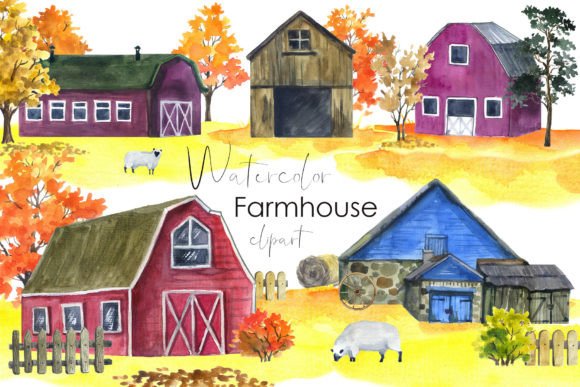
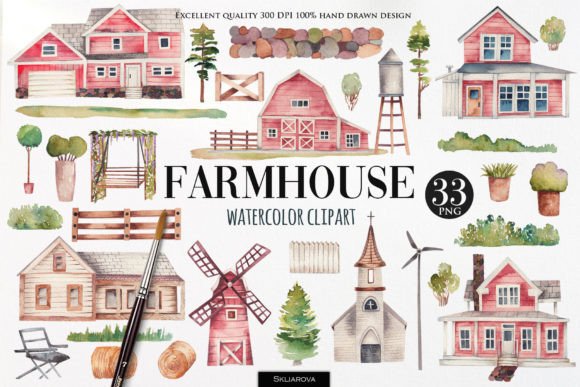
In a digital world saturated with sharp vectors and perfect geometry, there is a distinct hunger for organic textures and warmth. This is where the Red Farmhouse Clipart collection steps in, bridging the gap between high-quality digital assets and the tactile feel of traditional illustration. For designers, marketers, and creators, this isn't just a set of images; it is a toolkit for storytelling. The collection offers 33 distinct watercolor elements, featuring charming houses, lush trees, textured grass, and rustic fences. What sets this apart is the attention to detail: the houses are rendered at a substantial 3500x2000 pixels (approximately 11.5x6 inches), ensuring that your design assets remain crisp and vibrant whether used on a small social media icon or a large-format poster.
Understanding the Visual Style and Personality
The defining characteristic of the Red Farmhouse Clipart is its authenticity. It does not attempt to mimic a sketch or a digital render; it embraces the fluidity of watercolor. The style carries a distinct personality that can be described as "rustic modern." It avoids the clichés of overly kitschy country art, instead offering a sophisticated take on pastoral life. The color palettes are grounded and realistic, capturing the earthy reds of barn wood and the varied greens of summer foliage.
From a brand identity perspective, this style communicates approachability, tradition, and warmth. If you are building a brand for an artisanal food product, a bed-and-breakfast, or a lifestyle blog, these elements provide an instant visual shorthand for "quality" and "homemade." The transparent PNG format is critical here; it allows these elements to float over any background—be it a textured paper stock for a wedding invitation or a clean white header for a web design project—without awkward white boxes interrupting the composition.
Strategic Applications Across Industries
The versatility of this collection allows it to shine across multiple sectors. It is not limited to a single use case, making it a valuable addition to any creative professional’s library. Here is how different audiences can leverage these assets:
- Wedding and Event Design: For stationers, the Red Farmhouse Clipart is ideal for creating cohesive suites. You can build a narrative around the "venue" theme. Use the large farmhouse illustration as the focal point for the invitation, and then use the smaller trees and fences to create delicate corner flourishes for the RSVP cards and menus. The high-quality illustration ensures that even intricate details print clearly on textured cardstock.
- Small Business Marketing: Entrepreneurs and small business owners often struggle to find stock imagery that feels authentic. These watercolor elements solve that. A local nursery or garden center could use the tree and grass elements to create social media graphics that feel organic and fresh, rather than sterile and corporate.
- Publishing and Editorial Design: Bloggers and publishers can use these elements to break up text-heavy pages. A lifestyle blog discussing "slow living" or home renovation can use the farmhouse illustrations as pull quotes or sidebar art. This adds visual hierarchy to the page, guiding the reader's eye and improving engagement.
- DIY and Craft Projects: For the hobbyist, the possibilities are endless. Because the files are high-resolution (300 DPI), they are perfect for physical printing. You can print these elements onto transfer paper to create custom tote bags, pillows, or framed art prints for your home. The transparent background makes layering these elements onto your own projects seamless.
Integrating the Assets with Modern Typography
One of the most common pitfalls in design is pairing a complex illustration with a conflicting typeface. When working with the Red Farmhouse Clipart, your typography choices will make or break the final product. Because the clipart is organic, textured, and detailed, your font choices should generally provide contrast or harmony without competing for attention.
For a brand identity that feels established and trustworthy, consider pairing the watercolor elements with a clean sans serif font. A geometric sans serif creates a beautiful tension between the modern digital text and the vintage watercolor art. This combination works exceptionally well for web design, where readability on screens is paramount. The clean lines of the text ensure legibility, while the clipart provides the emotional hook.
Alternatively, if your project leans heavily into the romantic or vintage aesthetic—such as a wedding invitation or a boutique label—a script font or handwritten font can be effective. However, exercise caution with hierarchy. If both the art and the text are highly decorative, the design can become cluttered. Use the watercolor elements as the "hero" image and let the typography play a supporting role, perhaps in a muted color extracted directly from the illustration.
Technical Workflow and File Management
Efficiency is key for professionals. The Red Farmhouse Clipart set is delivered as PNG files with transparent backgrounds, which is the industry standard for drag-and-drop functionality in software like Canva, Adobe Photoshop, and Illustrator. However, understanding the dimensions is vital for a smooth workflow.
The main house elements are 3500x2000 pixels. This is a generous size, but it is not infinite. If you are designing a large-scale banner or poster, you need to be mindful of your DPI settings. At 300 DPI (dots per inch), the house measures roughly 11.5 x 6 inches. This is perfect for standard letter-size paper or A4 printing. If you attempt to stretch the image significantly beyond this size for a billboard or large trade show banner, you will eventually lose quality. Conversely, because they are high-quality illustration files, you can reduce them significantly—down to business card size or web icons—without any loss of sharpness or pixelation.
Color Consistency and Brand Perception
Color plays a massive role in how your audience perceives your message. The red in the farmhouse is not just a color; it is a psychological trigger associated with stability, shelter, and passion. When using these assets, try to extract complementary colors from the image itself to use in your typography or background colors. This creates a cohesive visual hierarchy that feels intentional and professional.
For example, if the shadows in the tree foliage are a deep olive, use that color for your body text. If the wood grain of the fence is a warm beige, use that as your background canvas. This technique ensures that the Red Farmhouse Clipart doesn't look pasted on, but rather integrated into the design.
Commercial Licensing and Final Considerations
For entrepreneurs and marketers, the ability to use assets commercially is non-negotiable. This collection is designed for commercial application, meaning you can use it to create products for sale, such as printed merchandise, digital planners, or client work. This versatility makes it a sound investment compared to single-use stock photos.
When evaluating your project fit, consider the emotional resonance. Does your audience value tradition? Do they appreciate craftsmanship? If the answer is yes, the Red Farmhouse Clipart is likely a perfect fit. It moves beyond generic stock imagery to offer something with soul. By combining these watercolor elements with thoughtful modern typography and a clear layout strategy, you can elevate a standard project into a memorable piece of visual communication. Whether you are designing a logo, a wedding suite, or a marketing campaign, these assets provide the tools to create something that feels both timeless and refreshingly human.